
The garden’s unusual band of acid soil, in this otherwise predominantly alkaline area, provides the opportunity to cultivate plants such as rhododendrons, camellias, and magnolias, which would not ordinarily thrive in this location.
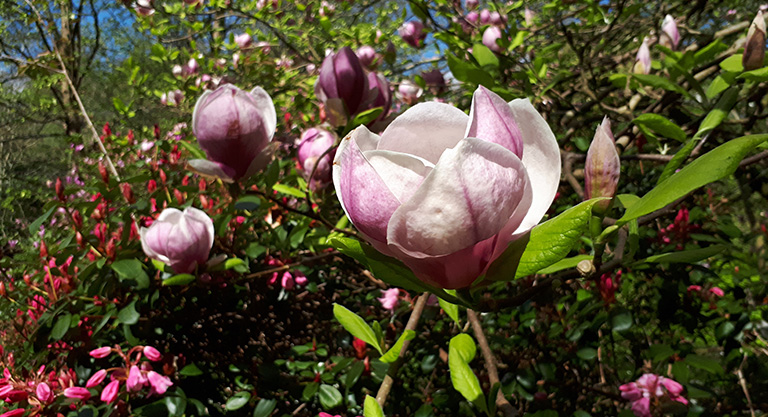
There is interest throughout the year, with a rich diversity of tree barks, then starting with the snowdrop displays, witch hazels, lilies and climbing roses throughout summer, followed by the autumn colour display from the Japanese maples.
The year begins.
As the garden opens in February after the New Year closure, work continues to maintain and develop new areas.
Late Winter
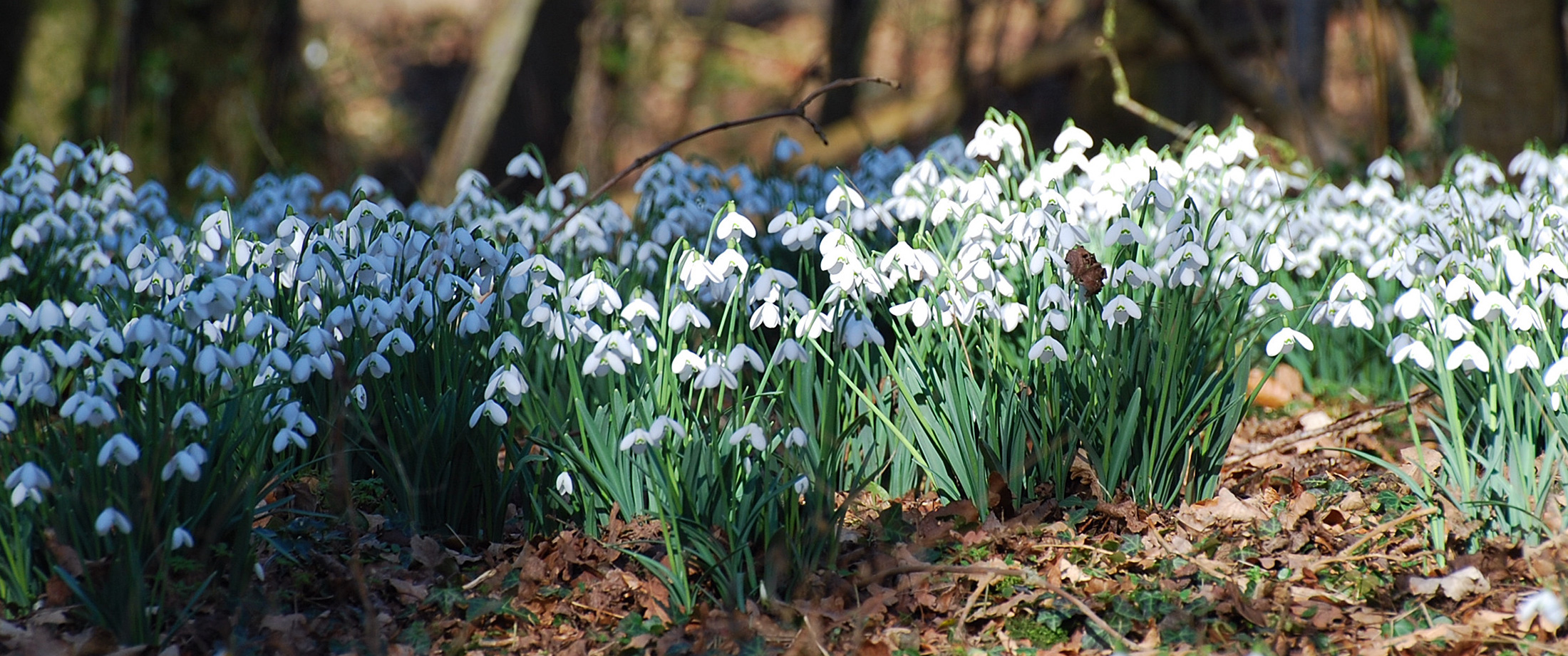
The first event of the year features the 80 plus named varieties of snowdrops. Trails are set out to lead visitors to the best of the collection and a lot of hard work is undertaken to make sure that the different species are clearly labelled.
For the galanthophiles amongst us, this is a big attraction. For the uninitiated, galanthus is the Latin name for the snowdrop and a galanthophile is an enthusiastic collector or identified of these lovely plants. They make spectacular displays throughout the woods that are well worth a visit. The collection includes our own ‘Evenley Double’, which was raised on the site, together with swathes of ‘S. Arnott’.
Plants of the season
Crocus
Cyclamen coum
Daphnes
Galanthus
Narcissus cyclamineus (Cyclamen-flowered daffodil)
Narcissus ‘Rijnvelds Early Sensation’ (early narcissus)
Galanthus (snowdrops) named varieties –
Galanthus ‘Atkinsii’
Galanthus ‘Brenda Troyle’
Galanthus ‘Galatea’
Galanthus ‘Hippolyta’
Galanthus ‘Ophelia’
Galanthus ‘Desdemona’
Galanthus ‘Magnet’
Galanthus ‘Straffan’
Galanthus ‘S. Arnott’
Galanthus elwesii var. monostictus
Galanthus nivalis ‘Lady Elphinstone’
Galanthus nivalis ‘Viridapice’
Galanthus plicatus ‘Wendy’s Gold’
Galanthus plicatus ‘Warham’
Early spring
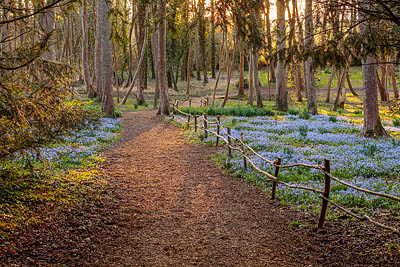
As the snowdrops are coming to the end of their display, the scillas begin to appear, creating a flowing blue stream.
Timmy Whiteley planted thousands of scillas, following a meandering course through the wood starting on North Ride and finishing by The Gatehouse. This is some 800 metres in length and is known as the Scilla Stream from its image of water flowing through the wood.
Plants of the season
Camellias
Erythronium (Dog Tooth Violet and Fawn Lilies)
Fritillaria
Leucojum (Snowflakes)
Helleborus (The Lenten Rose)
Magnolia
Mid-season Narcissus (Daffodils)
Narcissus pseudonarcissus (Wild daffodils)
Primula veris (Cowslip)
Prunus Sogdiana
Pyrus (Ornamental Pear)
Scilla
Late Spring
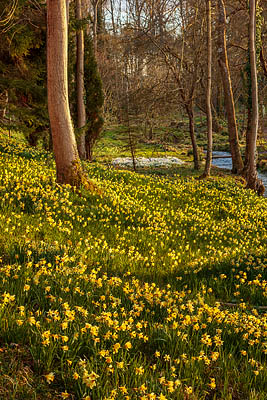
Daffodils make their bright and cheerful appearance throughout the wood. Bluebells follow the scillas mainly in Bluebell Wood, with pinkbells featuring in The Beeches.
Azaleas and rhododendrons abound in the wood and are particularly plentiful, with Azalea Glade and Rhododendron Ride giving a clue as to some of the places to look for them, although they are not just confined to these areas. Magnolias and camellias, also come into flower adding their varieties of colour and scent.
Plants of the season
Late narcissus Primula Hybrids
Trillium
Hyacinthoides non-scripta (British Bluebell)
Halesia (Snowdrop Tree)
Meconopsis (Himalayan Poppy)
Rhododendron and Azalea
Syringa (Lilac)
Viburnum
Summer
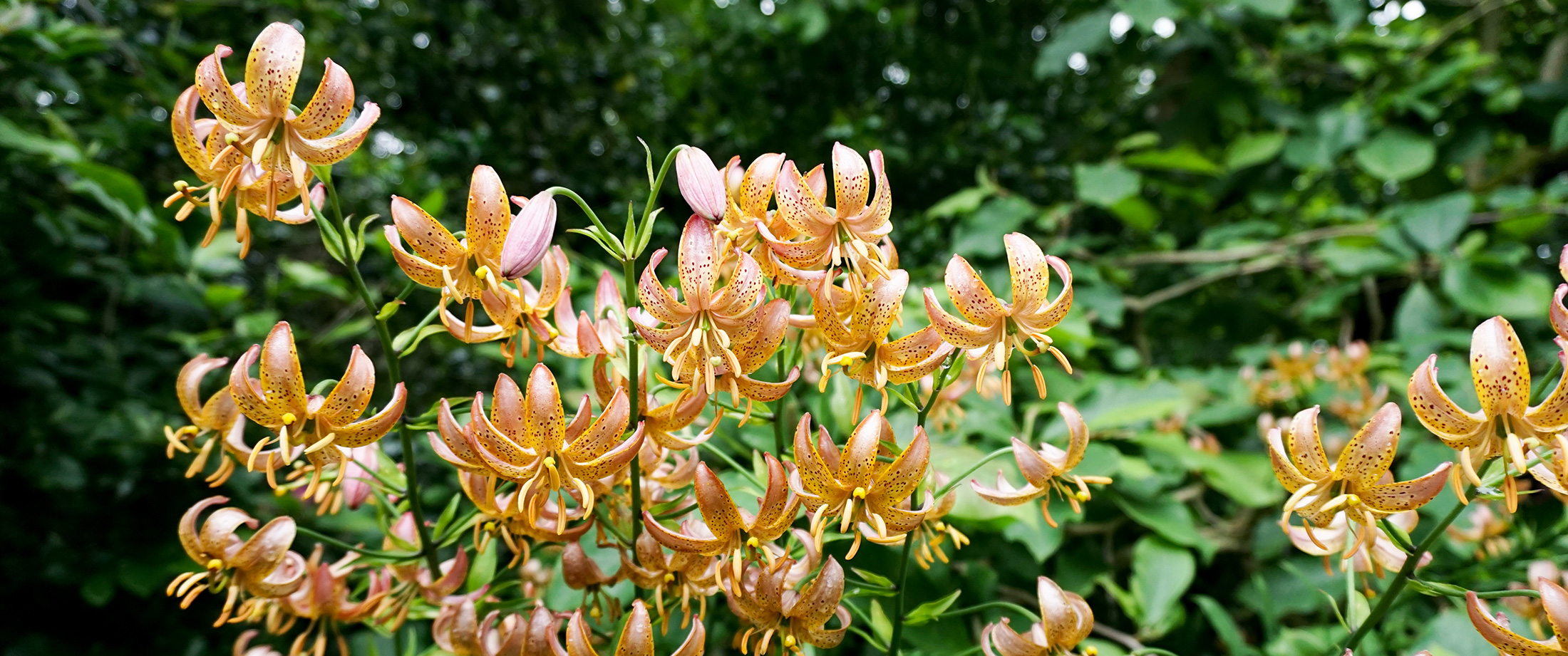
Many varieties of lilies can be found and were a particular passion of Timmy Whiteley when he developed the garden. ‘Evenley Jane’ and ‘Garden Society’, were all raised here by him. Roses abound and good use has been made of the trees to encourage them the climb, so don’t forget to look up!
Clematis, acers, crab apples, pears. The many euonymus begin fruiting.
Plants of the season
Cardiocrinum (Giant Himalayan Lily)
Clethera
Eucryphia
Hydrangea
Lilium (Lily)
Philadelphus (Mock Orange)
Stewartia
Autumn
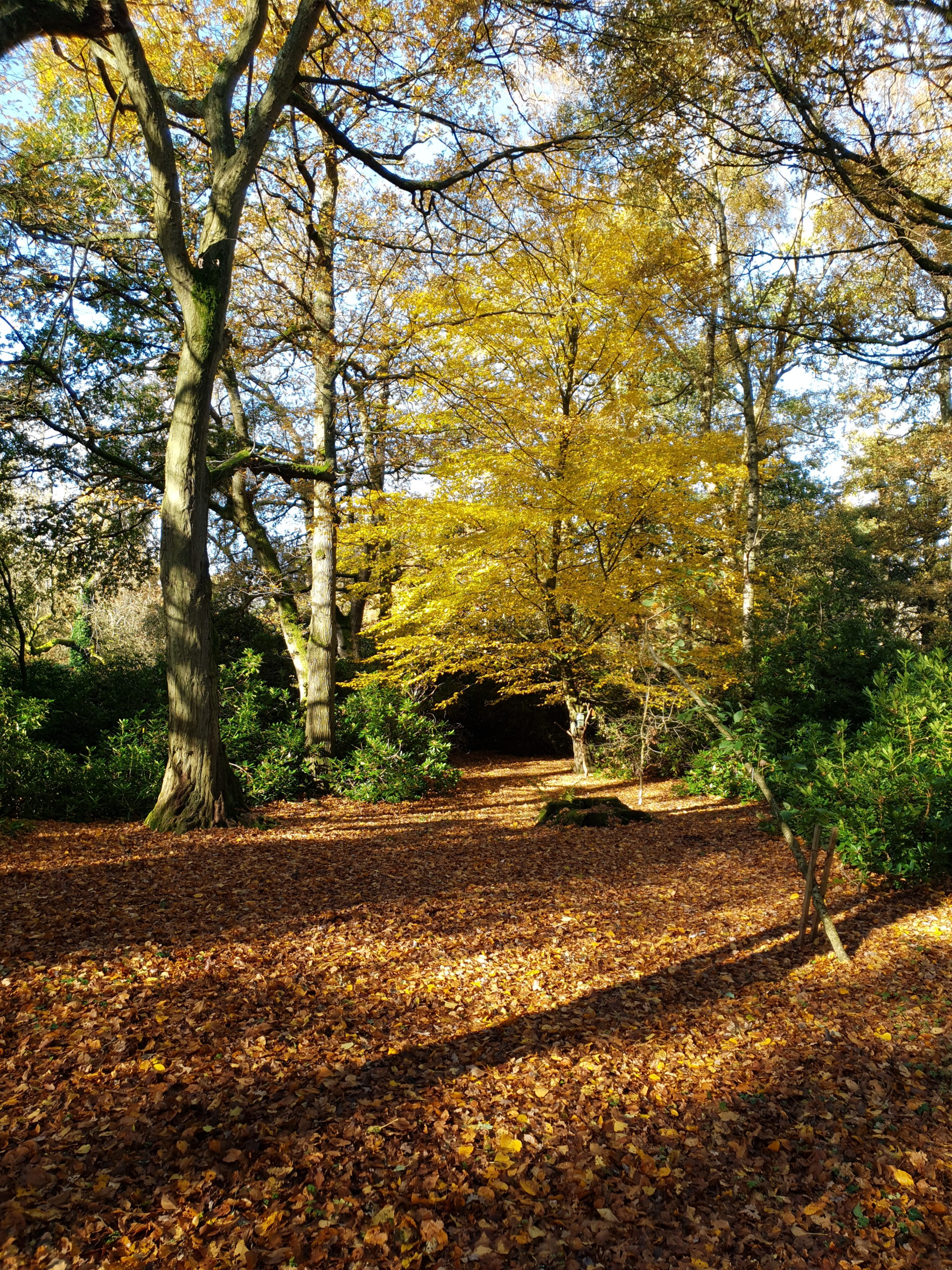
Many spectacular vistas can be seen when the autumn colours appear as the maples, oaks, acers and more of our trees start to transform the way the wood looks.
Autumn bulbs will begin to flower.
Plants of the season
Acer (Maple)
Betula (Birch)
Colchicum (Giant Autumn Crocus)
Cyclamen hederifolia (Ivy-leaved Cyclamen)
Euonymus (Spindle)
Juglans (Ornamental Walnut)
Liquidambar (Sweet Gum)
Quercus (Oak)
Sorbus (Mountain Ash and Rowan trees)
Sternbergia (Autumn Daffodil)
The plant collection – notable trees and shrubs
Abies pinosapo Stream Garden/Snowdrop Walk
Acer circinatum Acer Glade
Acer cissifolium Azalea Glade
Acer davidii The Garden – near Pavilion
Acer negundo subsp. mexicanum Camellia Glade
Acer palmatum ‘Atropurpureum’ Rhododendron Ride
Acer palmatum ‘Osakazuki’ Rhododendron Ride
Aesculus parviflora The Garden – near Pavilion
Betula ermanii Azalea Glade
Betula utilis var. jacquemontii ‘Jermyns’ The Valley Path
Camellia lutchensis var. lutchensis Camellia Glade
Carpinus turczaninovii Azalea Glade
Euonymus grandiflorus Pond Ride
Euonymus macropteris Pond Ride
Euonymus myrianthus Azalea Glade
Euonymus tingens The Desert
Davidia involucrata var. vilmoriniana The Garden – opposite Pavilion
Fagus sylvatica var. heterophylla Pond Ride
Gymnocladus dioica The Garden – opposite Pavilion
Juglans hindsii Opposite the Pond
Lindera obtusiloba Azalea Glade
Liriodendron tulipfifera ‘Fastigiata’ The Garden – opposite Pavilion
Magnolia ‘Evenley Gift’ Bond Street Path
Magnolia ‘John Bond’ Azalea Glade
Magnolia macropylla The Desert
Magnolia sieboldii ‘Colossus’ Camellia Glade – opposite Pavilion
Metasequoia glyptosroboides The Garden – path to Rhododendron Ride
Nyssa sinensis Next to Anniversary Bridge
Parrotia persica Rhododendron Ride
Picea smithiana Azalea Glade
Pinus patula The Pines
Platanus orientalis var. insularis Stream Garden
Podocarpus salignus Rhododendron Ride
Prunus sargentii Broad Ride
Prunus sogdiana Stream Garden & North Ride
Quercus castaniefolia ‘Green Spire’ Pond Ride
Quercus ellipsoidallis Rhododendron Ride
Quercus x libanerris Azalea Glade
Quercus palustris The Valley Path
Quercus rubra ‘Evenley Gold’ Bond Street Path
Rhododendron ‘Bow Bells’ Opposite Pavilion
Rhododendron loderi ‘King George’ Azalea Glade
Rhododendron ‘Lord Roberts’ Rhododendron Ride
Rododendron ‘Susan’ Rhododendron Ride
Sequoia sempervirens Meadow Path
Sorbus wardii Stream Garden
Styrax japonica The Desert
Torreya californica Acer Glade
© 2024 Evenley Wood Garden, Evenley , Northamptonshire, NN13 5SH - Privacy Policy
HTML Sitemap - XML Sitemap - W3C Compliant & CSS - Google+ - Cookies - Website by Technique Web